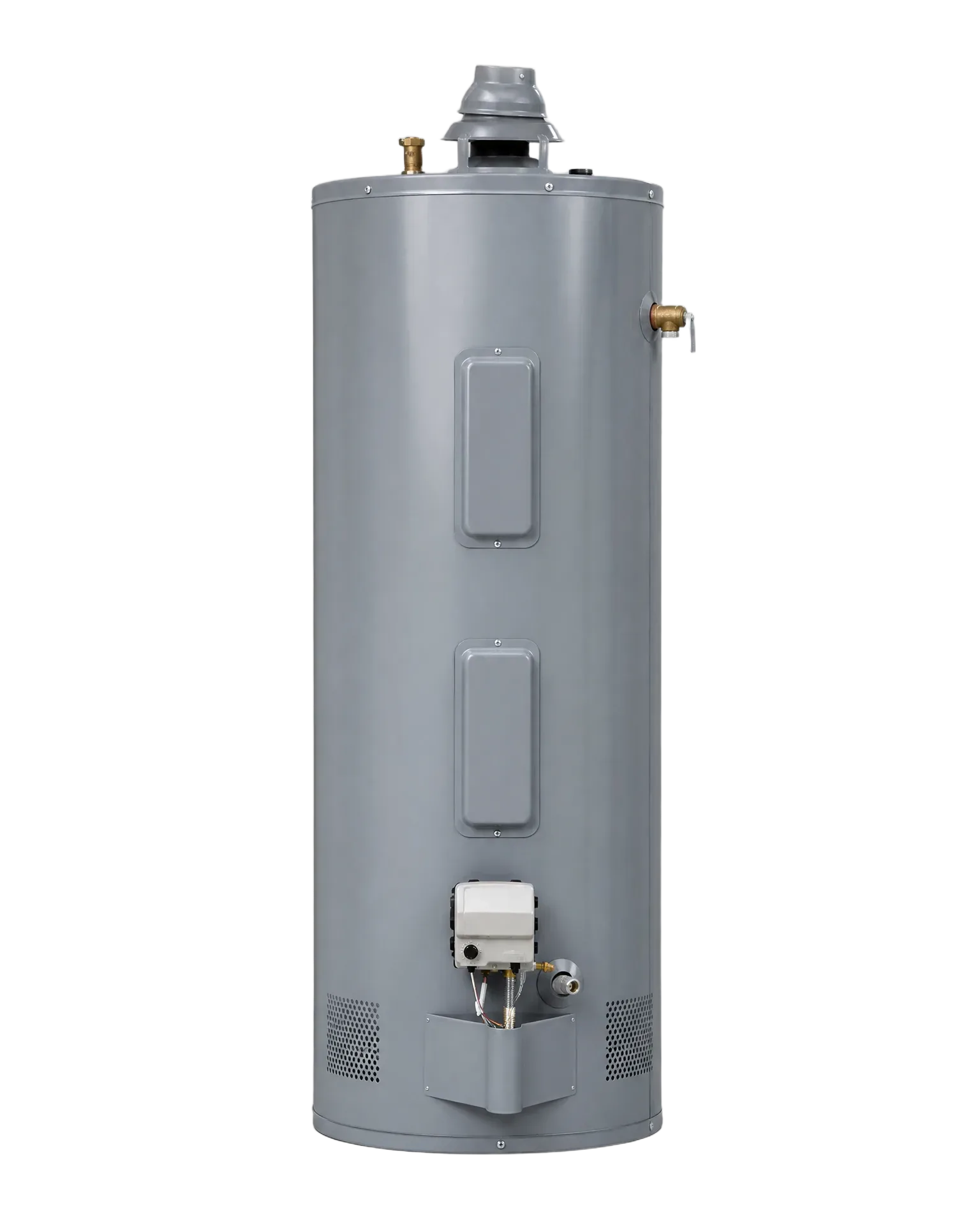
A slow leak you haven't found yet
Water pooling under the tank can soak into the floor or the wall behind it before you ever see it, and that damage costs more to fix than the heater.
A water heater usually tells you before it fails outright. Rusty water from the hot tap, a tank that makes popping or rumbling sounds, water pooling around the base, or a pilot light that won't stay lit all point to a unit near the end of its life. So does hot water that runs out faster than it used to or never gets as hot as it should. Most tanks last about 8 to 12 years, and once a unit passes that mark, a repair often just delays a second failure instead of fixing the problem. In Connecticut, a leaking tank left unattended can damage flooring and drywall before anyone notices, especially if it sits in a basement or closet that isn't checked daily. If your water heater is showing more than one of these signs at once, that's usually the point where replacing it costs less trouble than trying to keep it going.




A tank corrodes from the inside before it ever shows on the outside. Once rust works through the steel lining, it won't patch or seal, and the leak that follows only gets worse.
That's why a rusted tank gets replaced, not repaired. Connecticut's power costs make it worth catching the signs early, before a slow leak turns into a flooded basement.
Water pooling under the tank can soak into the floor or the wall behind it before you ever see it, and that damage costs more to fix than the heater.
Tanks tend to give out under strain, and a dead water heater in January means cold showers until someone can get a new one in.
Walk past it and check the floor around the base. Any dampness there, even a little, means the tank is already failing from the inside. Look at the water itself next time you run a hot tap: rust color, or a metallic smell, means the lining is going. Listen when it's heating. A healthy tank is quiet. One that pops, cracks, or rumbles has sediment baked onto the bottom, and that buildup makes it work harder to heat the same amount of water. If the pilot won't stay lit, or the water never gets as hot as it used to, you're not dealing with one bad part so much as a tank that's worn out everywhere at once. Left alone, any of this ends the same way: a flooded utility closet or basement floor, and a repair bill on top of the heater you still have to replace.
A plumber can replace a thermocouple, swap a heating element, or clear a drain valve on a tank that's otherwise sound. But once a tank is corroding from the inside or has passed ten or twelve years of service, those repairs buy a little time on a unit that's going to fail anyway. The money spent on the part is money not put toward a new tank that won't be the next emergency call.
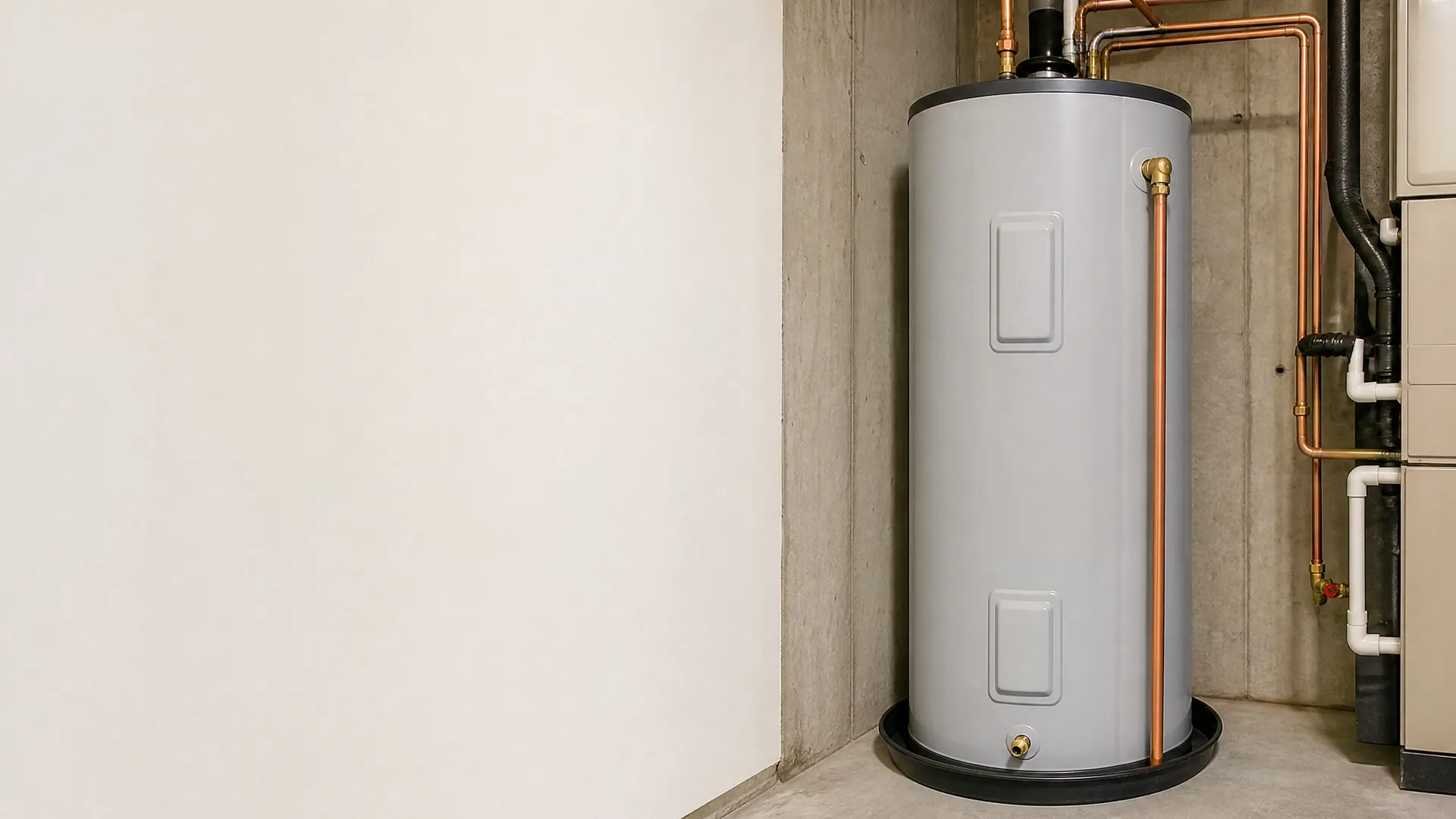
A new water heater installed before the old one fails means you pick the timing. You're not without hot water on a Saturday morning, and you're not paying for an emergency visit on top of the unit itself. A licensed installer can size the new tank correctly for your household and set it up to code, which matters more in Connecticut given how much it costs to run one on electric rates here.
An electric water heater that's losing efficiency as it ages costs you more every month to run at 29.31 cents per kilowatt-hour. A new unit recovers hot water faster and holds its temperature better, so it isn't drawing power as long or as often to do the same job.
EIA-861 2025 statewide residential average


Your request goes to one pro, not a list of companies.
No fee to send it, and nothing to sign.
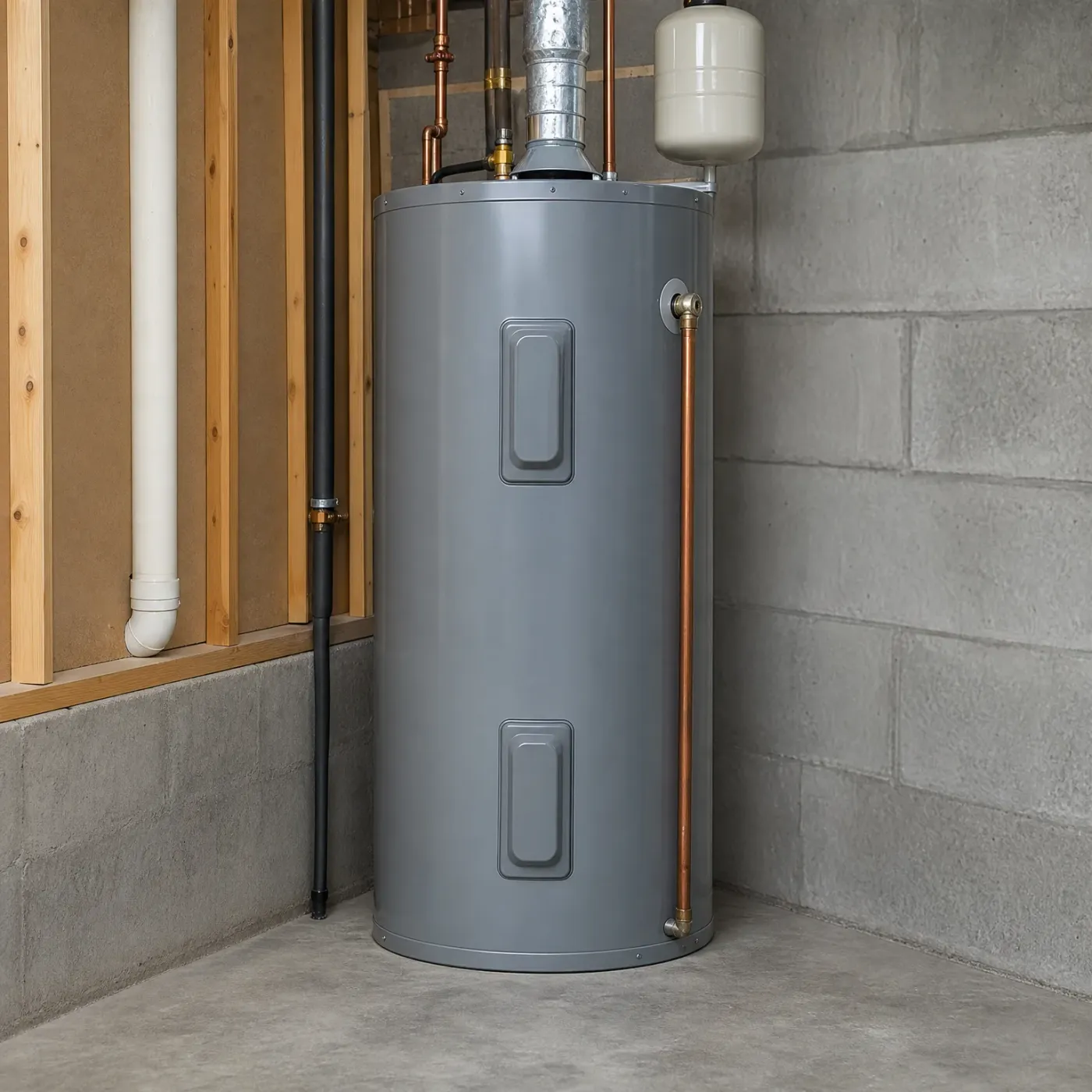
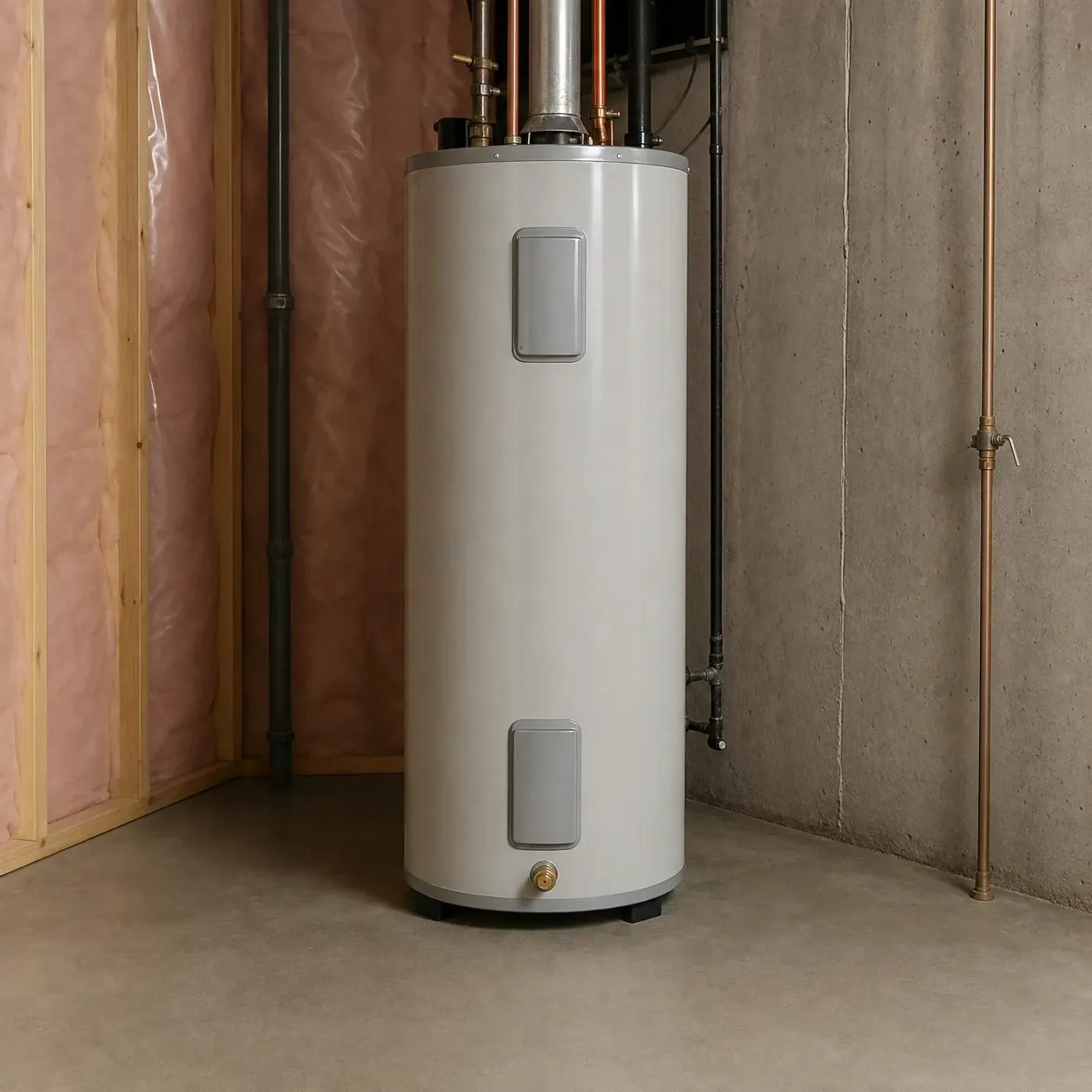
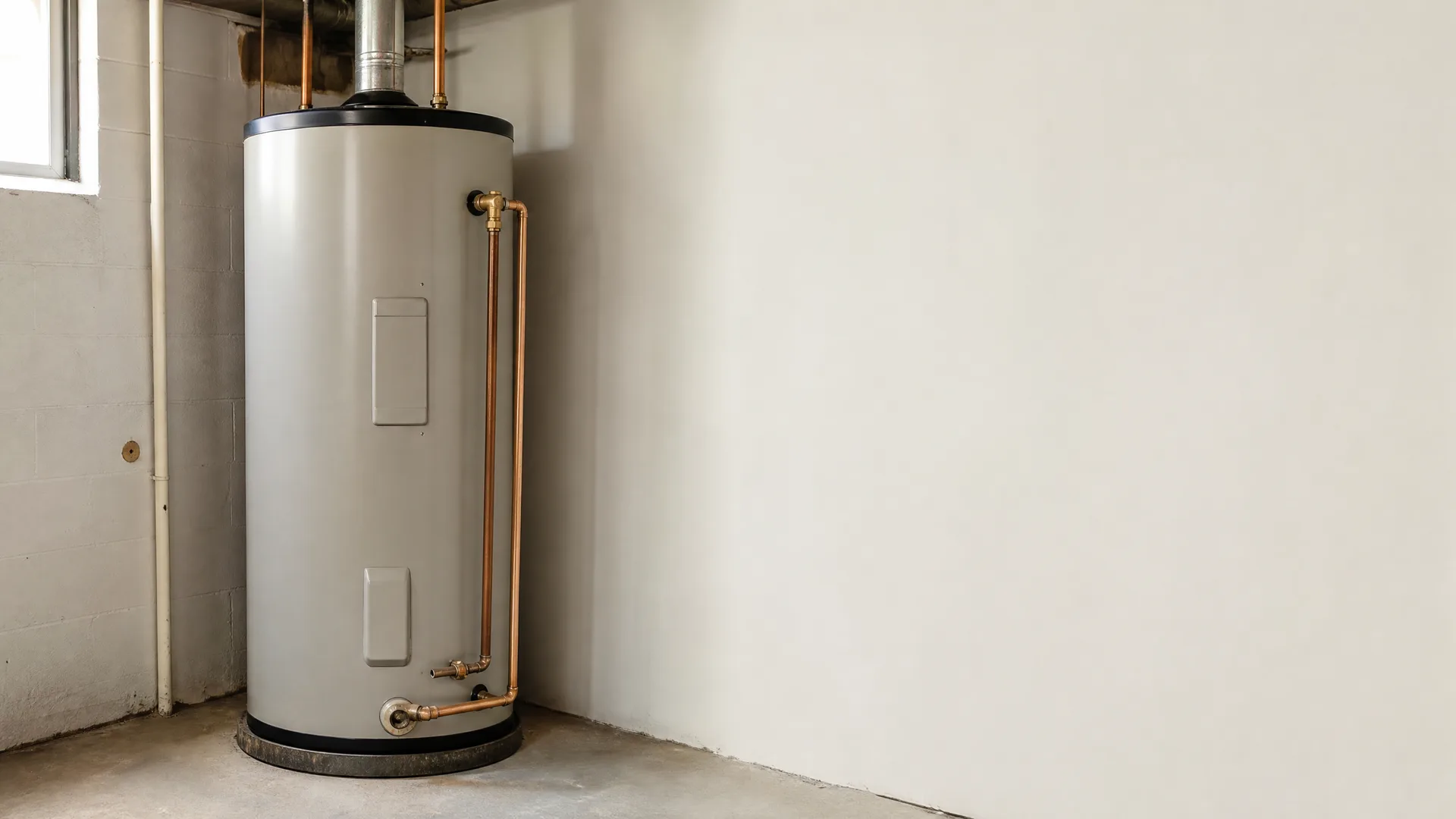
This electric water heater sits connected and upright, feeding off copper pipe and a drain line with an expansion tank above it. No rust on the tank, no water at the base. A unit like this is still doing its job without costing you a service call.
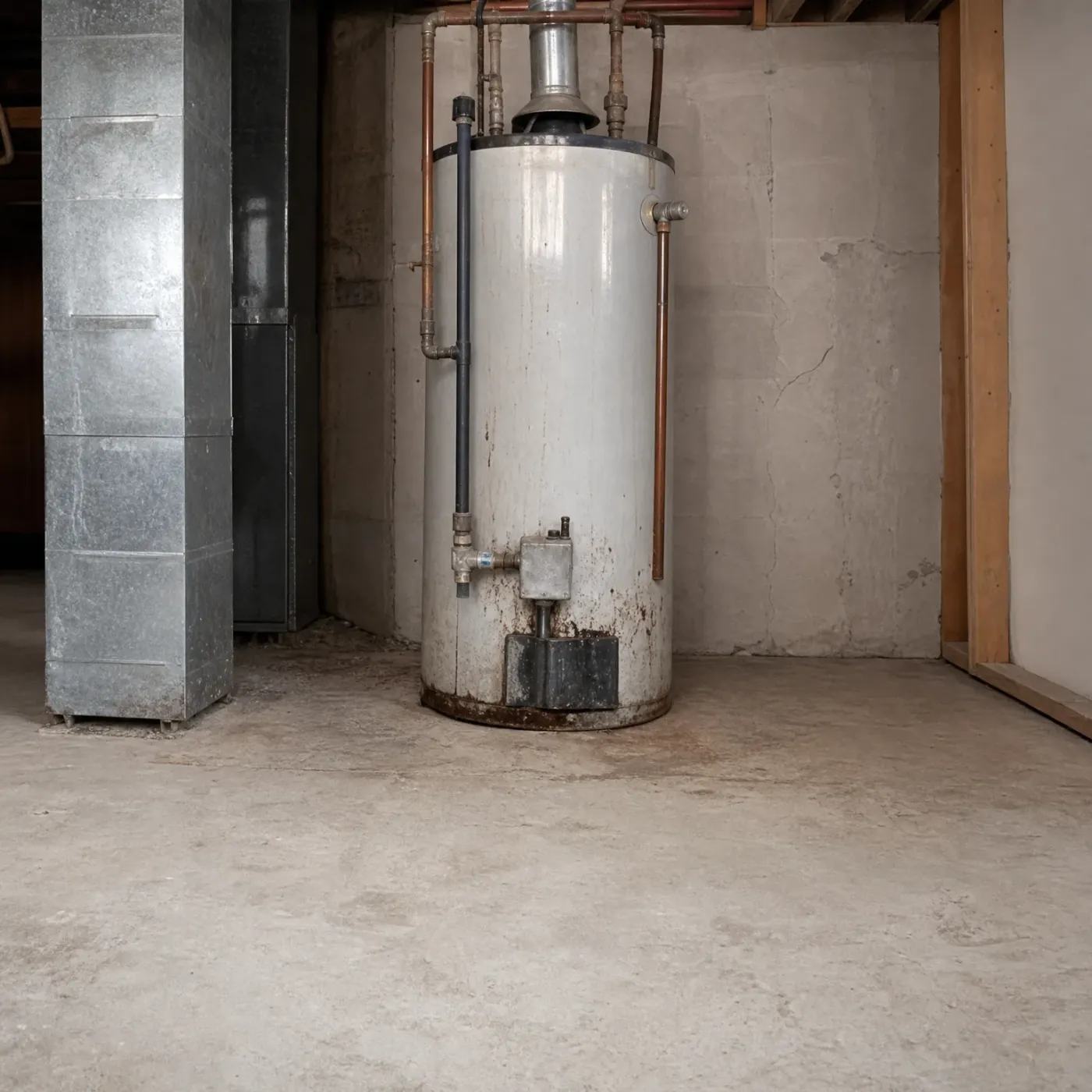
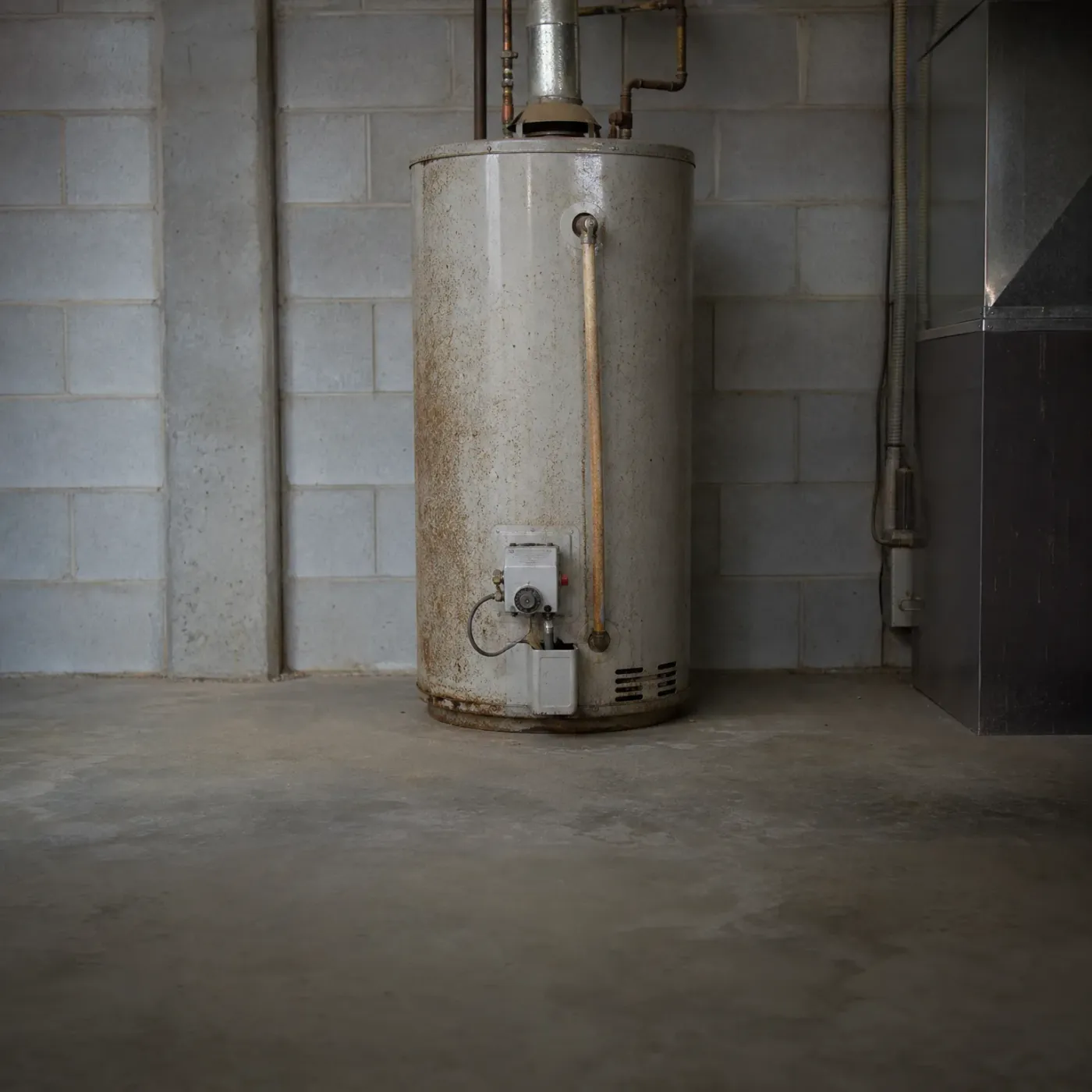
Rust and mineral scale cover this tank from top to bottom, and the copper fittings show it's been leaching for a while. A gas water heater in this shape won't take a patch or a part. The steel underneath is already compromised, and replacement is the only way forward.
You've seen the signs on the outside, the rust-colored water, the dampness at the base, but it helps to know what's actually happening inside the tank to get to that point. Most tanks don't fail all at once. The damage builds for years before it ever shows up on your floor or in your tap water.
Every tank-style water heater has a glass lining inside the steel tank, and a rod called the anode rod that attracts corrosion so the steel doesn't have to take it. That rod wears down over the years. Once it's spent, the tank itself starts to rust, working through the steel from the inside. You won't see this happening. There's no gauge for it. The first sign is usually rust in your hot water or a pinhole leak at a seam or fitting, and by then the damage is already done. Steel doesn't rust back to normal once it starts, which is why a tank that's corroding gets replaced rather than patched.
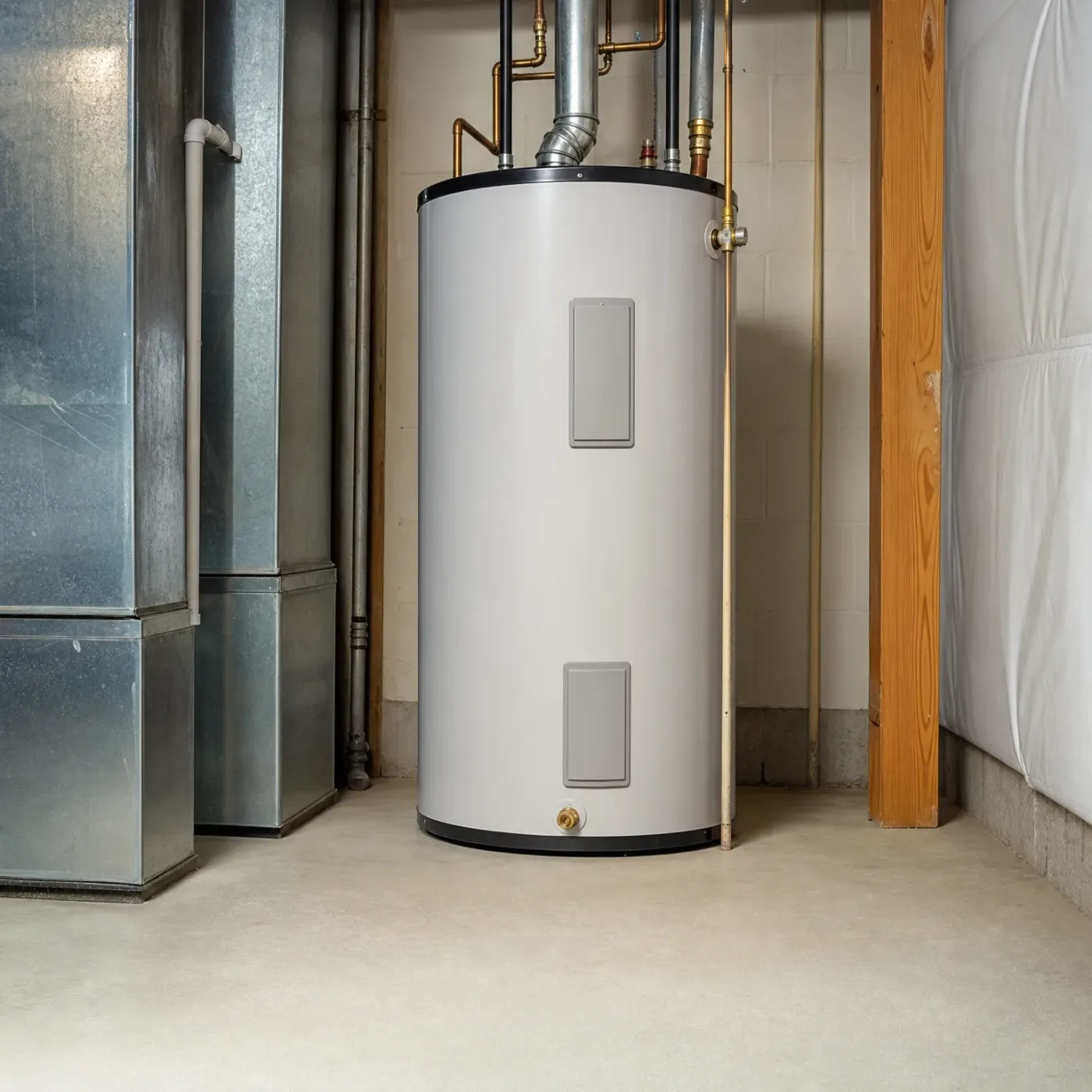
This electric water heater sits upright with both access panels sealed, its drain valve dry, and the copper and galvanized lines overhead holding tight. No rust streaks down the tank. No water staged at the base. It's heating on schedule and costing you what it should.
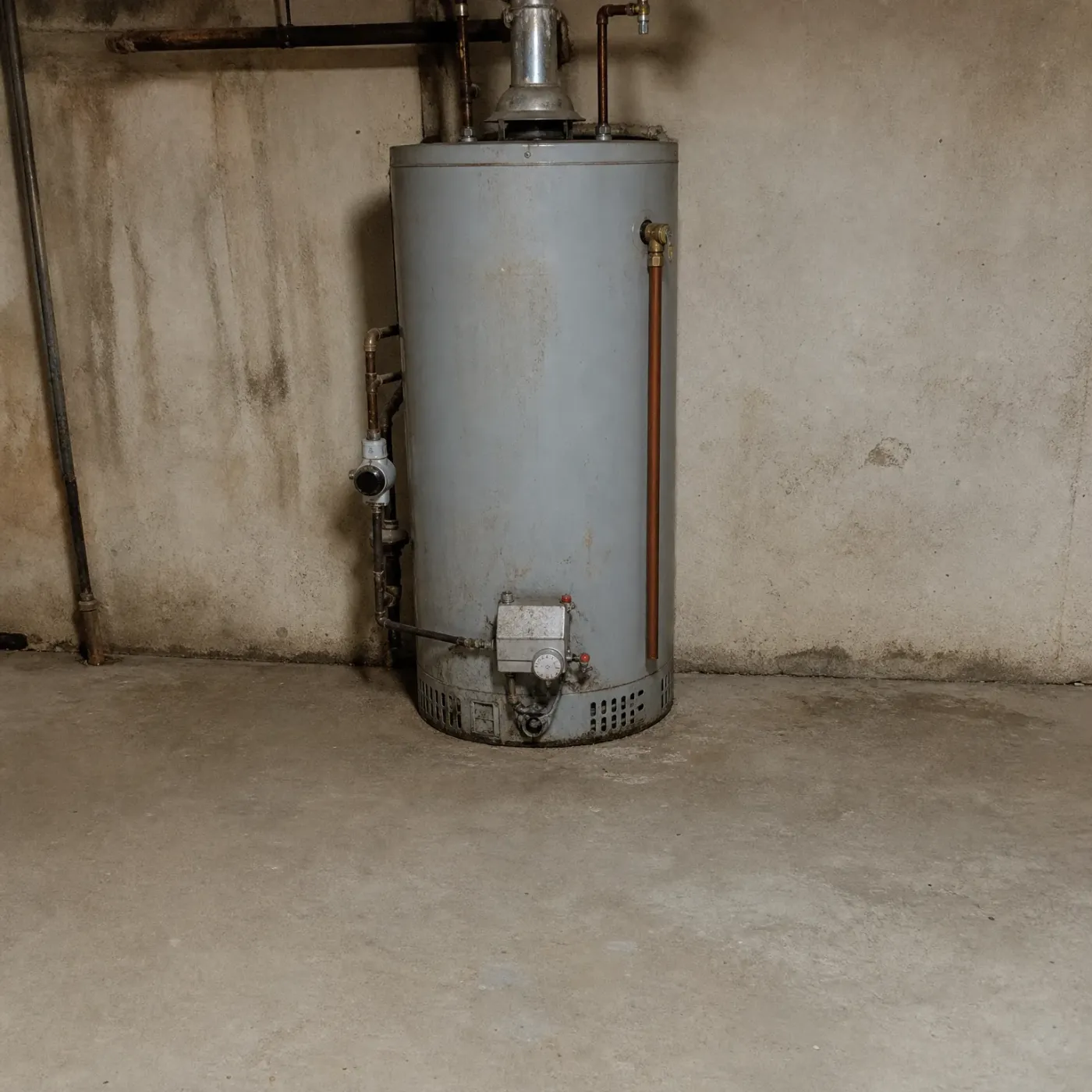
This old gas water heater sits against bare concrete with its flue vent and gas control showing their age. The pressure relief valve and copper lines are original equipment too. A tank left this long without a second look is one you should check for rust, dampness, or a pilot that won't hold.

Rust in the water, a damp spot at the base, a tank that's past ten or twelve years old. Any one of those means it's working against you, not for you, and the power to run it costs more here than in most of the country. Replacing it now is the straight path. Waiting just means you replace it later, after a flood instead of before one.
You don't have to track down who's any good at this or get three plumbers out to look at the same tank and give you three different answers. One licensed Connecticut plumber who installs these year-round takes the call, looks at what you have, and tells you what it needs. No comparing quotes, no repeating the story twice.


No phone calls to make




