Why you run out of hot water fast in Connecticut

Describe your water heater job, and a local pro who handles it gets in touch.

Get matched

Why do I keep running out of hot water fast in Connecticut?

Cold showers in the middle of winter here get old fast, and it feels worse when the tank should still have plenty left. You're not using more hot water than you used to. Something in the tank has changed, and in most cases it's a part that's wearing out rather than a sign you need a bigger tank or different habits.

Sediment or a failing heating element is cutting your tank's real capacity

Connecticut's water leaves minerals behind, and over time they settle at the bottom of the tank and build into a layer of sediment. That layer sits between the burner or the lower heating element and the water, so less of the heat you're paying for actually makes it into the tank. On an electric water heater, a lower element can also fail outright, which means only the top portion of the tank ever heats. Either way, the tank still looks full, but the hot water in it runs out well before it used to. Flushing the tank clears sediment; a bad element needs replacing. A plumber can tell which one you're dealing with by checking the tank directly.

A bathroom with a gray towel hanging on a bar against a taupe wall, a glass-enclosed shower with marble-look tile, showerhead and handheld sprayer, a window showing green trees, and a stone countertop with a sink at right.

You turn the shower on and go find your towel first, out of habit, because this is the third morning this week the water hasn't warmed up by the time you get back. Connecticut winter mornings don't forgive a cold shower. You step in anyway, hoping, and it's lukewarm at best. No steam on the mirror. The towel sits on the rail untouched a minute longer than it should. You stand there doing the math on how long the tank actually takes to recover anymore, and it isn't adding up to what it used to. Somewhere downstairs the tank is running, same as always, just not keeping up the way it did last year.


A man seen from behind raises his hand to wave at a woman standing in the open front doorway of a single-story house with gray shingle siding, white columns and a gabled porch entry.

Where the hot water actually goes

A tank heater keeps forty or fifty gallons at the top ready to go, and cold water comes in at the bottom as you draw from the top. If sediment has built up on the bottom of the tank, that layer sits between the burner or the lower element and the water, so it takes longer to recover and the hot layer stays thinner than it should. On an electric tank, the lower heating element can also fail on its own, which leaves only the top element working. You get a few minutes of warm water from the top of the tank, then it turns cold, because nothing below is heating anymore.

None of this shows up by looking at the tank from outside. It takes someone who works on these every day to flush it, test the elements, or check the thermostat and tell you which one is actually happening in your tank. Once you describe what you're seeing, a contractor who handles this kind of repair in Connecticut can be matched to your situation and reach out directly, so you're not the one calling around and explaining the same thing to three different companies.

A gray upholstered sofa with a textured cushion sits beside a dark round side table holding a vase of green foliage, with a table lamp and sheer-curtained window behind.
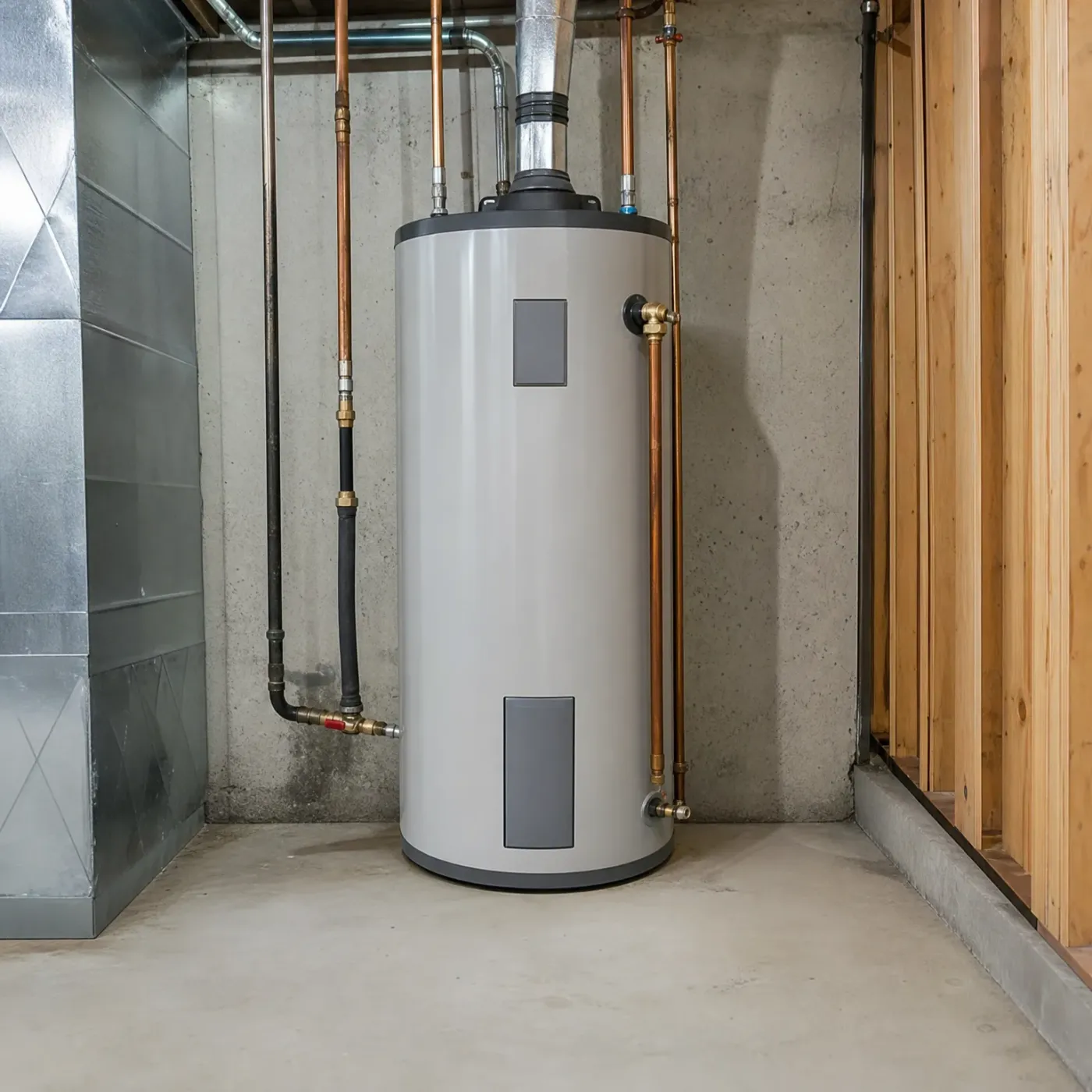
A gray cylindrical water heater stands in a basement corner against a concrete wall, with copper pipes, insulated flex lines, a metal flue, and insulated wall framing with ductwork to the right.

Working the way it should

A tank like this heats on schedule and holds its recovery time. The pipes run warm within a few minutes of the burner or element kicking on, and you get a full tank's worth before the water cools. No rust at the base, no corrosion creeping up the sides.

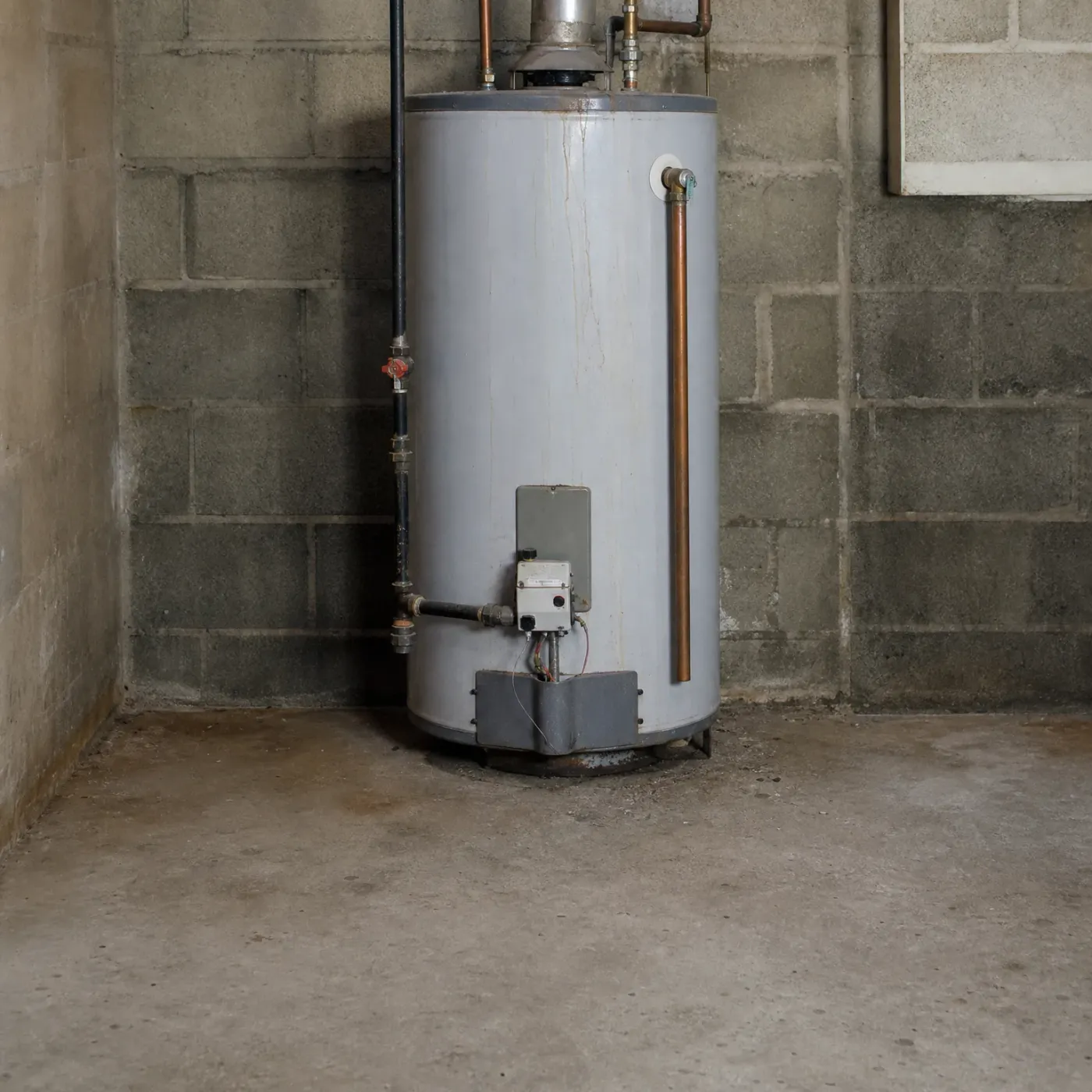
A rusting gas water heater with copper and steel pipes stands against a concrete block wall on a bare concrete floor.

Running on borrowed time

Rust along the base and up the body usually means the tank itself is failing, not just a part inside it. Once corrosion reaches this point, it's not what's heating the water, it's whether the tank holds water at all. That's worth a look before it fails outright and floods the floor around it.

A gray cylindrical gas water heater with copper and black pipes stands in the corner of a basement with concrete block walls and a bare concrete floor.
Before you get your water heater repair
A gray cylindrical water heater standing in a basement corner against a concrete wall, with copper and black pipes, a metal flue, and ductwork nearby, next to wood framing on the right.
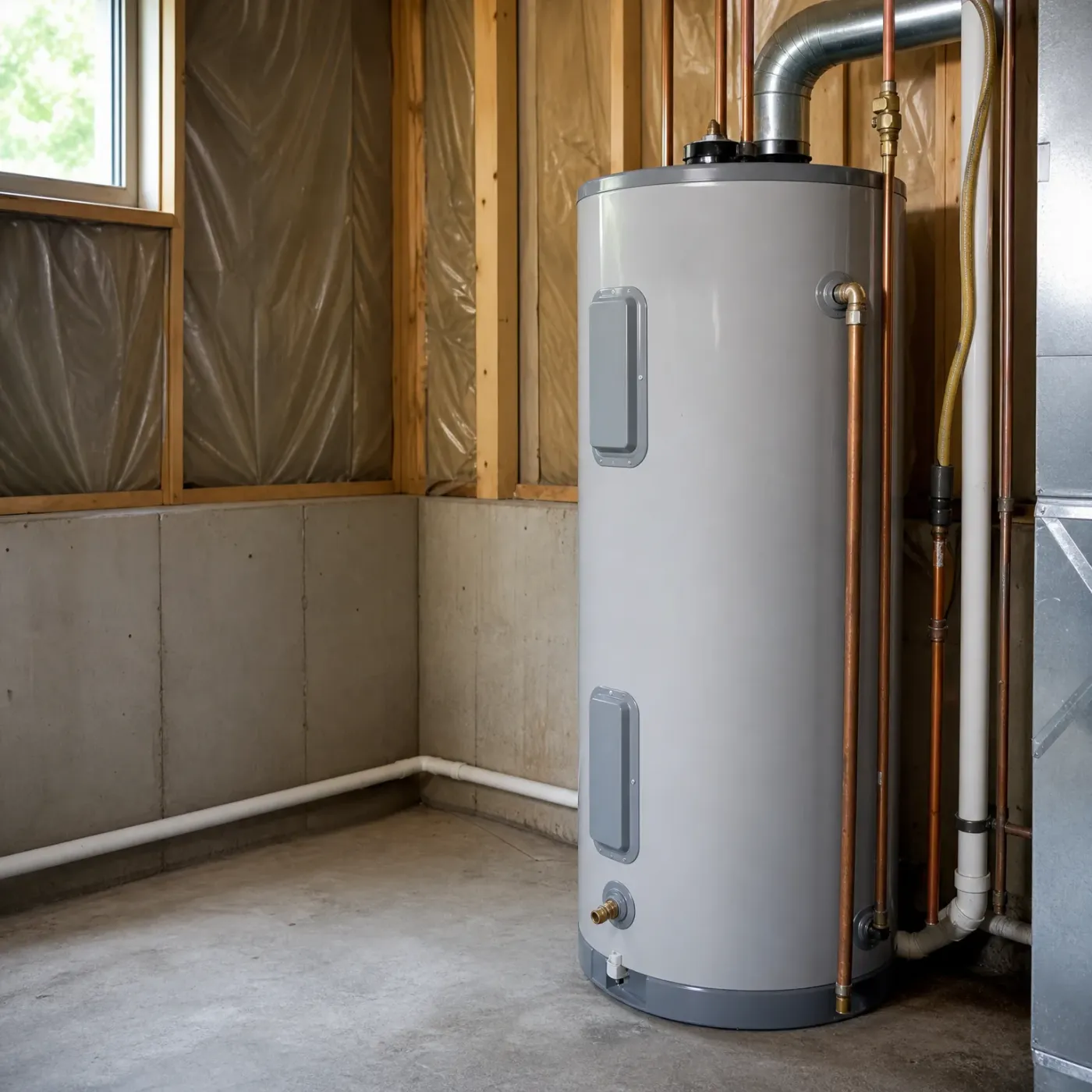
After you get your water heater repair
A gray cylindrical water heater stands in a basement corner with exposed wood framing, plastic vapor barrier, concrete walls and floor, copper and PVC piping, and a metal flue vent.

A local pro for your water heater repair

Answer a few questions instead of calling shop after shop.

Say what's going on with your water heater, and a pro who works on them reaches out.

Find a water heater pro

Sending the form costs nothing.

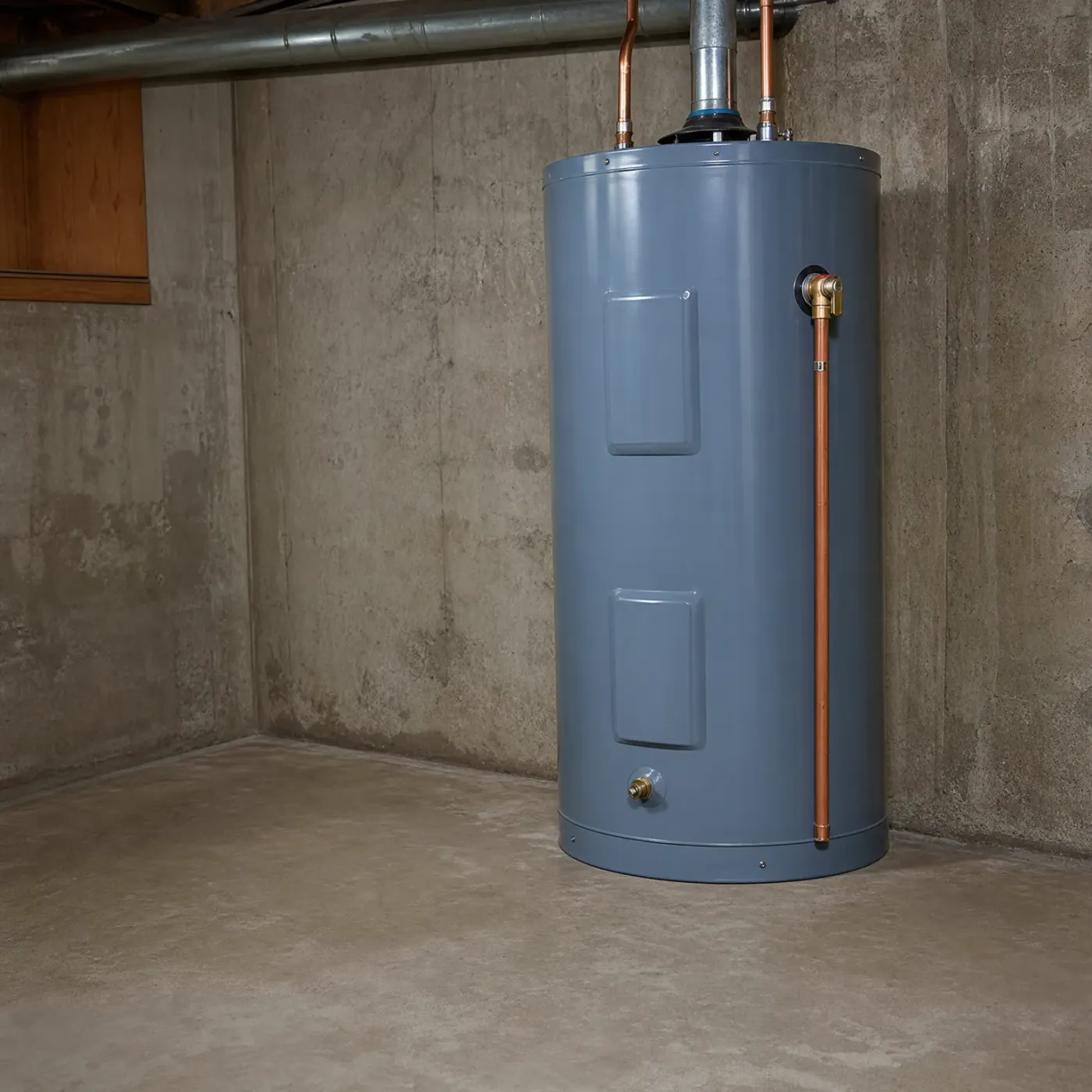
A gray cylindrical water heater standing on a concrete floor in a basement corner, with copper pipes and a metal duct running overhead along bare concrete walls.
A tank like this recovers on schedule, so a full tank means a full tank, not twelve minutes of warm water.
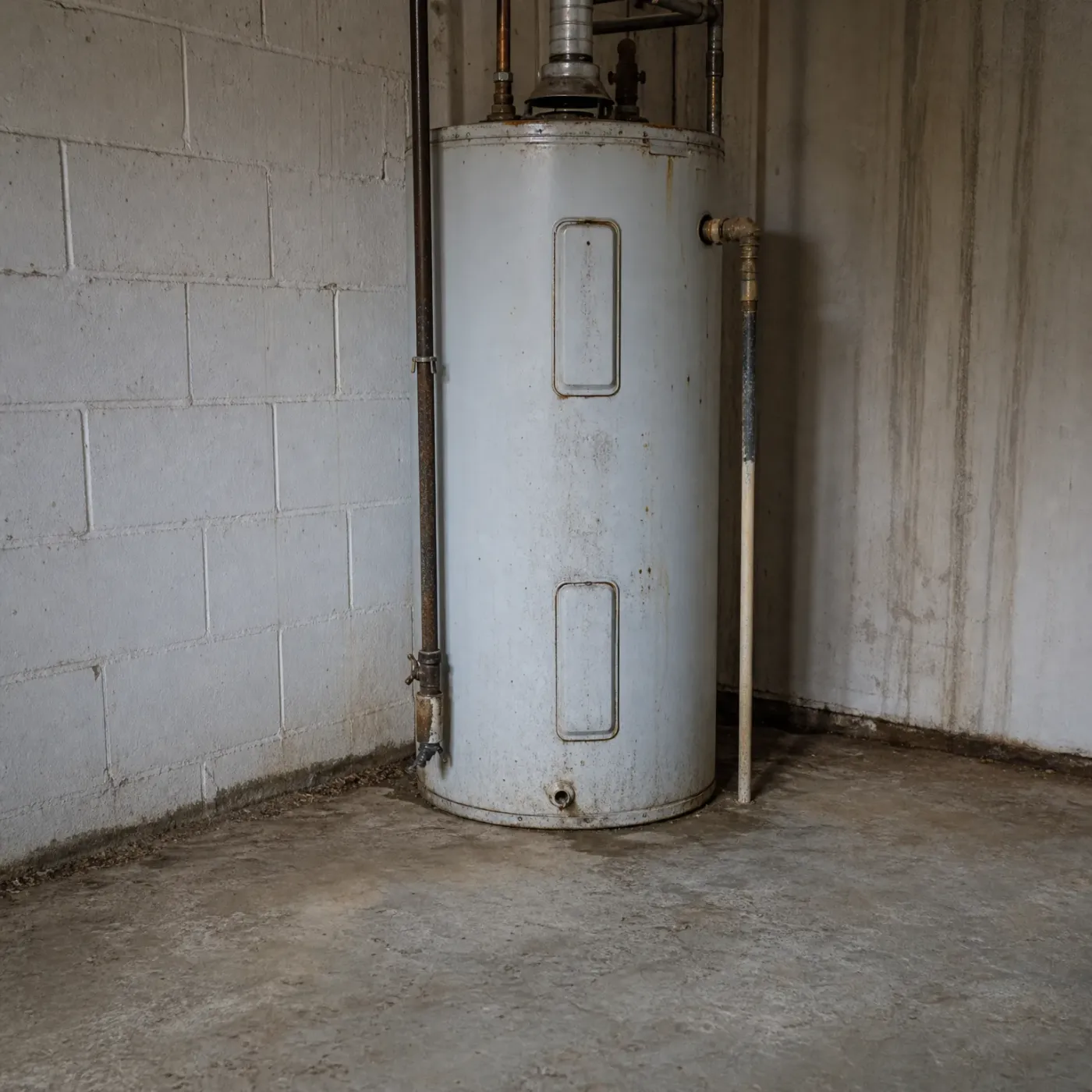
A white cylindrical water heater with rust stains and two access panels stands in a basement corner between a painted concrete block wall and a bare concrete wall, with metal pipes running up and alongside it on a concrete floor.
Rust at the base and corroded fittings mean the tank is losing ground, and the hot water runs out sooner each month.
A bearded man in a plaid flannel shirt stands in a kitchen looking out a window toward snow-covered shrubs, with a steaming mug on the windowsill and potted plants on a shelf behind him.
A smiling man with dark curly hair in a navy t-shirt sits on a gray couch indoors, with a large-leafed plant and a window in the background.

Power costs 29.31 cents per kilowatt-hour statewide

At 29.31 cents a kilowatt-hour, an electric water heater running longer than it should to make up for a weak element or a bad thermostat shows up fast on your bill. A tank struggling to recover costs you twice: a shorter shower and a higher charge for it.

EIA-861 2025 statewide residential average

What's Actually Going On

  • A tank that used to last through two showers and now quits after one has a specific cause worth finding before it fails completely.
  • Sediment, a failing element, or a thermostat that's lost its accuracy all show up the same way: less hot water than the tank is rated for.
  • Connecticut's electric rates mean a struggling tank doesn't just run out sooner, it costs more to fall short every time.
  • A contractor can trace the real reason your recovery time has slipped instead of you guessing at it morning after morning.
  • Matching you with someone who handles this kind of repair means skipping the calls, the quotes, and explaining the problem over and over.
  • Once you're paired with a contractor who takes on your specific situation, they reach out to you directly to sort out next steps.

Running out of hot water fast isn't random and it isn't about using more than you used to. It's sediment sitting between the burner and the water, a heating element that's failed, or a thermostat reading wrong, and each one cuts your recovery time in a way you can feel every morning. Left alone, any of these gets worse, not better. A tank that loses ground keeps losing it, and at Connecticut's electric rates, a struggling water heater runs longer and still falls short, so you're paying more for less hot water, not less for the same amount.

The part you can't do from the shower is figure out which of these three it is. A sediment problem, a bad element, and a failing thermostat all look the same standing there with a towel waiting for water that isn't coming. That's a job for someone who can actually get inside the tank and check.

What you can skip is the part that usually comes next: calling around to find somebody, explaining the same problem three or four times, waiting on quotes to compare. Getting matched with a contractor who handles this kind of repair means you explain it once, to the person who's going to look at it, and they reach out to you directly. The guessing about sediment or the element or the thermostat is their job once they're in front of the tank. Finding them in the first place is the part that goes away.

At dusk, a dark board-and-batten house with a standing-seam metal roof and lit entry walkway of stone pavers, with two large outdoor heat pump units on a stone-walled pad at right and trees and hills in the background.

Water Heater Repair

Get the right pro for your water heater

Step 1 of 3: Equipment
  • A ceramic vase holding leafy green branches and a shallow wooden bowl sit on a wooden window ledge beside a sunlit window, with a cream upholstered chair and knit throw in the foreground.
    • Tell a local repair pro what your water heater is doing.
  • Sunlit living room corner with a beige upholstered sofa, a round wooden side table holding a ceramic vase of olive branches, linen curtains at a window, a floor vent in the baseboard, and a woven jute rug on hardwood flooring.
    • Once you send the form, finding a pro is off your list.
    • After you send the request, you're done searching.
  • A wooden side table with a single drawer holds a shallow carved wood bowl and a white ceramic vase of green eucalyptus stems, beside a window and an upholstered chair draped with a cream knit throw.
    • Fill out one short form instead of calling around.
    • Explain the job once and skip repeating it on every call.
  • Corner of a house with horizontal siding, a white-framed window and stone veneer base, beside a covered entry with wooden steps, a potted plant, mulched beds of green shrubs and a flagstone path.
    • Your request goes to one pro, not a list of companies.
    • The pro who reaches out is licensed in Connecticut.