The right pro for this job
Why your water heater is leaking in Connecticut
A puddle under the tank, a damp spot on the floor, water dripping from a fitting. Water heaters leak for different reasons, and some are worth a quick fix while others mean the tank is done. This page walks through what's likely going on and gets you to a licensed Connecticut contractor who can look at your unit and tell you straight.
Find my proA leaking water heater usually comes down to one of a few things. The tank itself may have corroded through, which happens as the steel lining wears out and lets water seep from the bottom or a seam, and once that starts, the tank won't stop. It could also be the temperature and pressure relief valve doing its job, releasing water because pressure inside the tank is too high. Or it could be a loose fitting, a bad drain valve, or a connection at the top where the water lines enter, all of which are simple to tighten or replace. A tank that's building too much pressure works harder to heat water, and that shows up on the power bill here in Connecticut before it shows up on your floor. What matters most is where the water is coming from. A leak from the top usually means a part. A leak from the bottom or the tank body means the tank is failing and won't be repaired, only replaced.


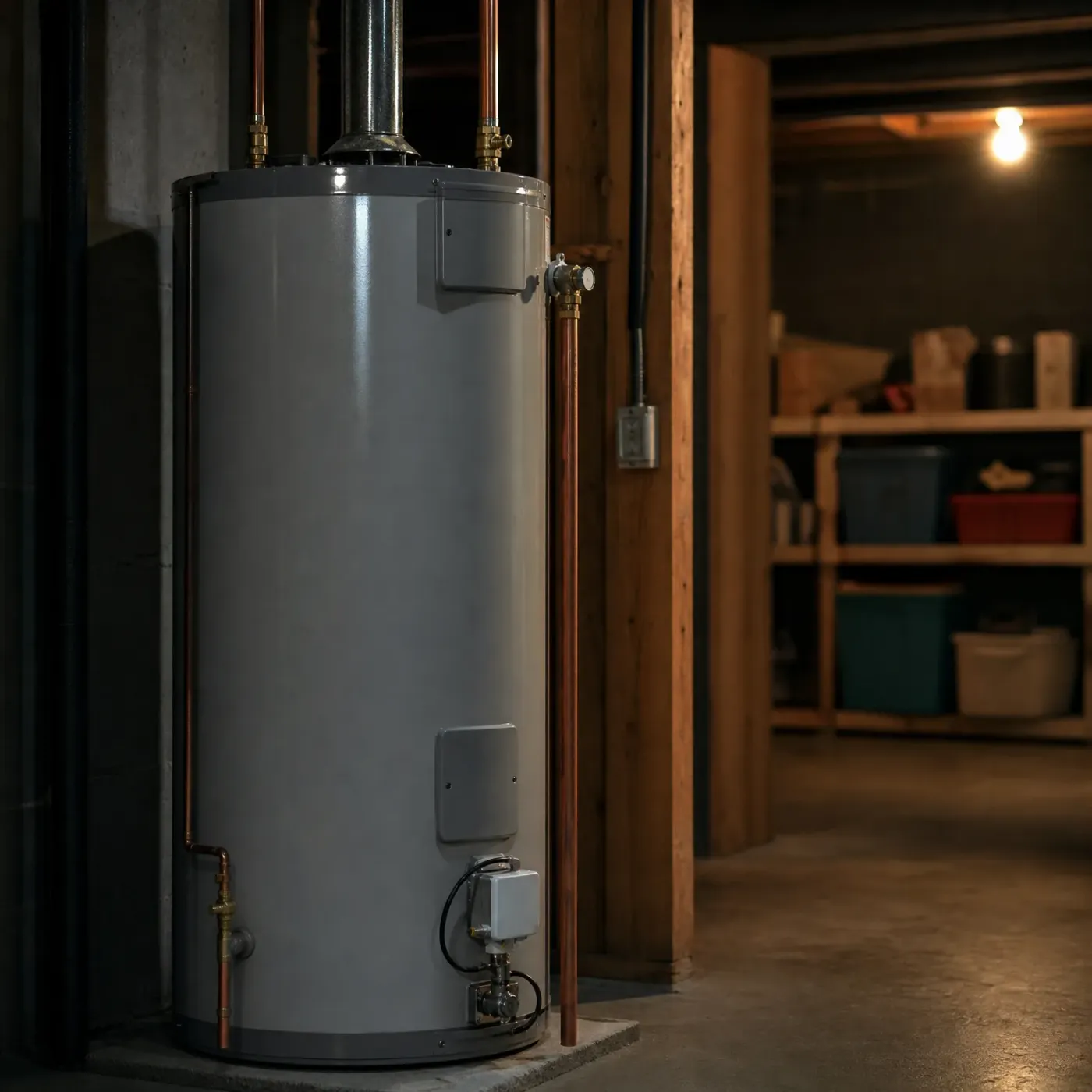
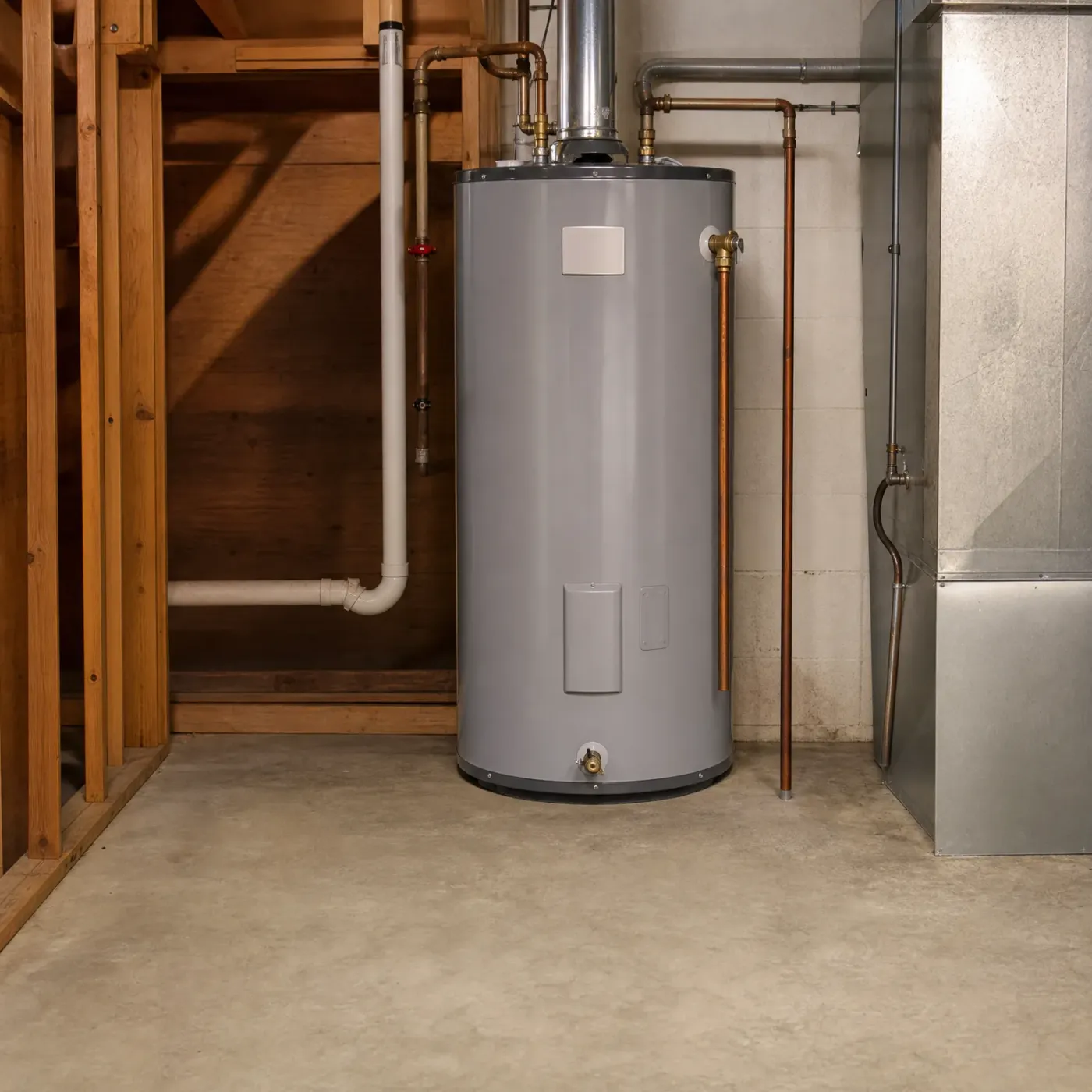
Most leaks trace back to one of a few spots on the tank. The pressure relief valve near the top is built to open when pressure or temperature inside gets too high, so water at the overflow pipe often means the valve is working the way it should. A leak at the bottom of the tank is a different story. That's the steel lining giving out, and once it rusts through, nothing seals it back up. Fittings where the inlet and outlet pipes meet the tank can also loosen over time, and that kind of leak tends to start slow, just a weep that takes months to show up as a puddle. The drain valve near the base is worth checking too, since it can crack or work itself loose from normal use. And during Connecticut's muggy stretches, don't rule out condensation. Humid air hitting a cool tank can bead up and run down the side, looking exactly like a leak when the tank itself is fine.
Where the water is actually coming from
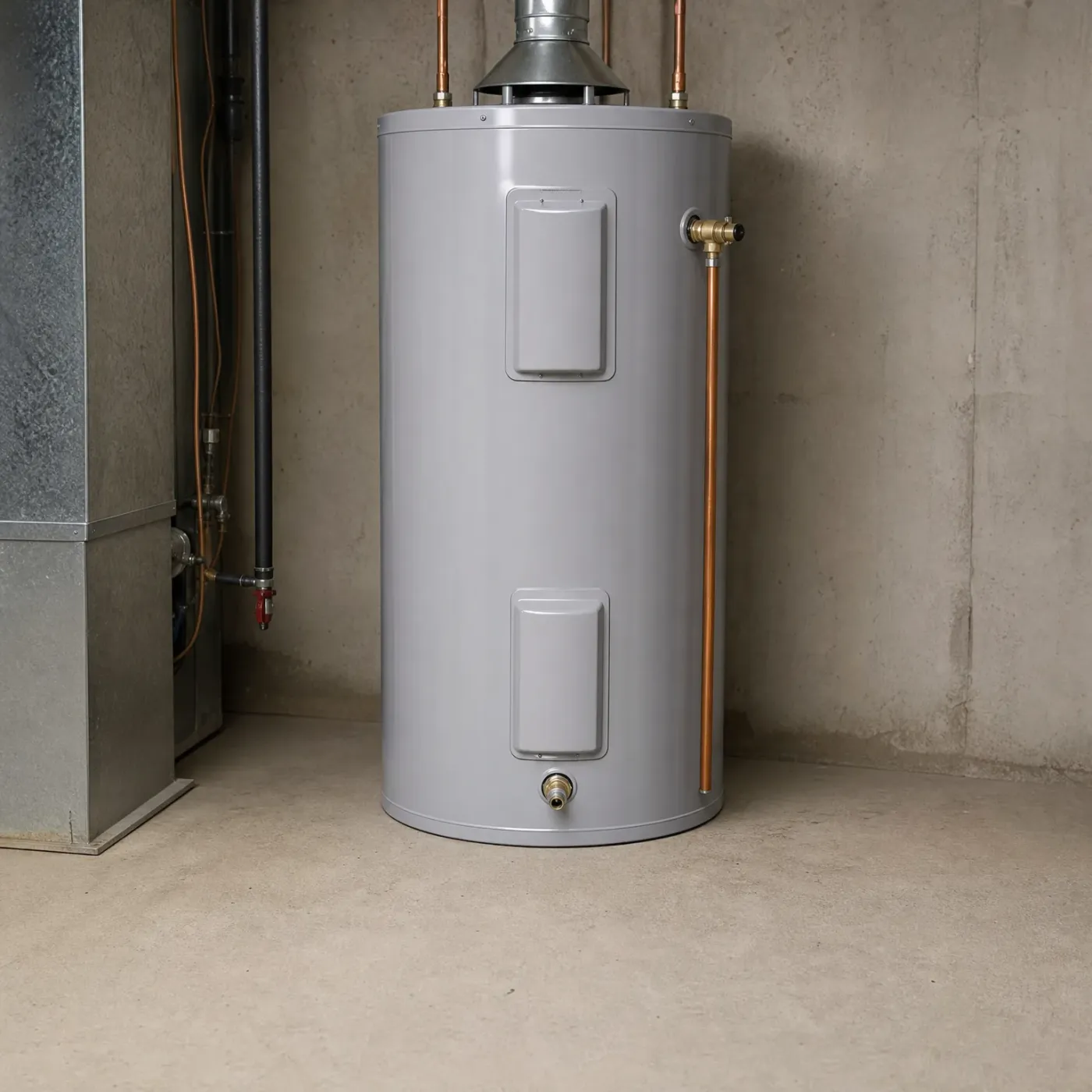
- The pressure relief valve sits near the top of the tank and opens on its own once pressure or temperature inside climbs past a safe limit.
- Water dripping from the overflow pipe that runs down the side of the tank usually means that valve is doing its job, not failing on its own.
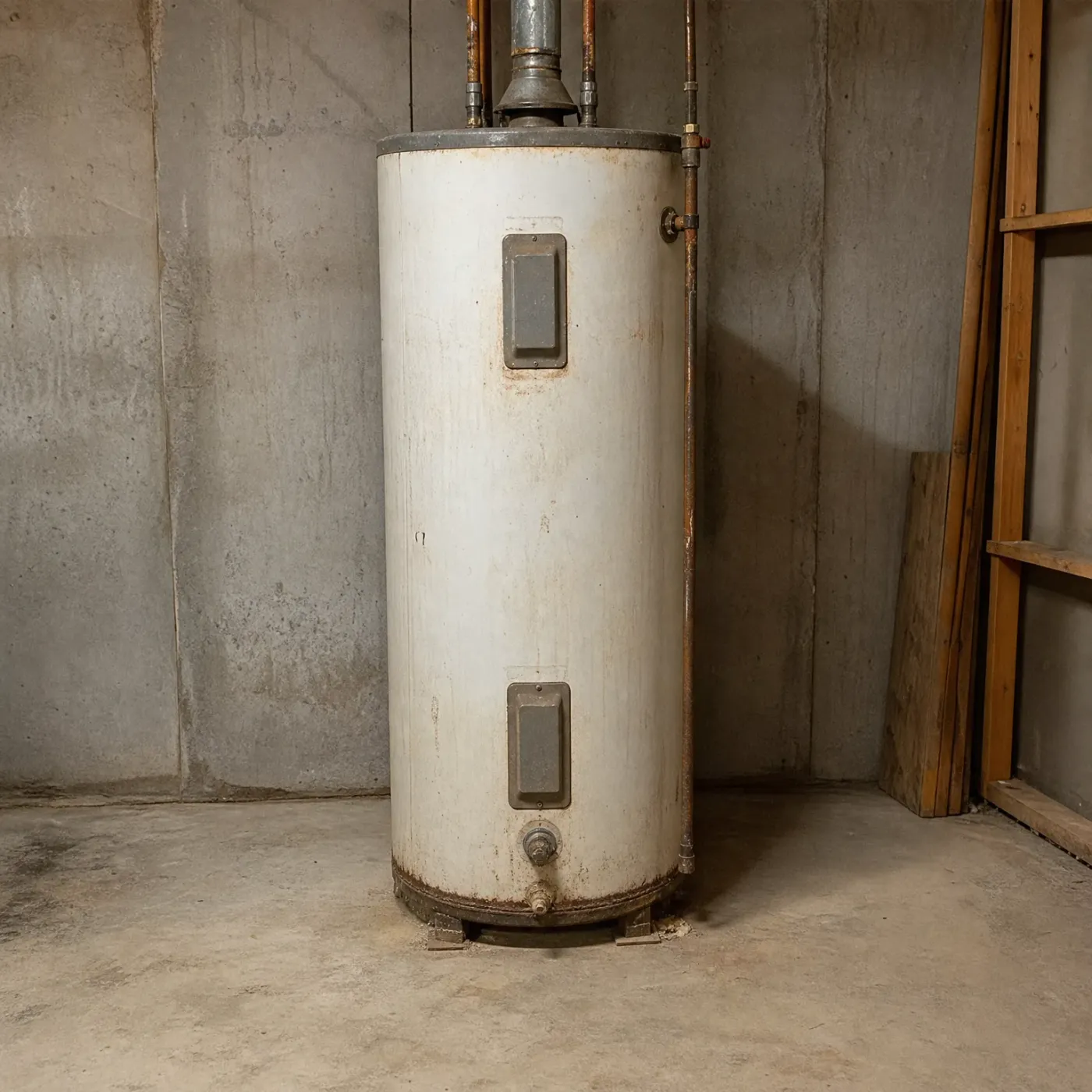
- A leak at the bottom of the tank almost always means the steel lining has rusted through, and no fitting or valve repair will stop it.
- Loose fittings where the cold inlet and hot outlet pipes connect to the tank can weep slowly for months before anyone notices the puddle.
- The drain valve near the base, used to flush sediment out of the tank, can crack or loosen enough to let water seep out continuously.
- Condensation on the tank during humid stretches can look like a leak even when the tank and every fitting are sound.




Matched to your water heater job
A leak doesn't wait for a good time, and water finds the floor whether it's January or August. Connecticut basements and utility closets don't forgive a slow drip for long, and a corroded tank only gets worse from here. Every day it sits is a day the water bill or the damage bill climbs, on top of power rates that already run high in this state. Figuring out whether it's a fitting you can tighten or a tank that's done costs you time you don't have, and calling around to different companies costs more of it. Send the request and a contractor who handles this work takes it from there. You stop checking the floor every few hours wondering if it's gotten worse. That's what you're after right now, not a diagnosis you have to manage yourself.
What a Leak Costs You at Home
- A tank that's been leaking for a while can soften the subfloor underneath it before you ever see standing water.
- Basements in Connecticut homes often hold other things on the floor, and a slow leak can ruin them before anyone notices.
- A leak near electrical outlets or a sump pump setup raises the risk of a short, not just water damage.
- Letting a corroded tank keep leaking usually ends in a full failure rather than a smaller, cheaper fix.
- A leaking heater often means no hot water while it's sorted out, which lands harder in the middle of a Connecticut winter.
- Mineral buildup from hard water can hide a slow leak at a fitting until it's already dripping steadily.
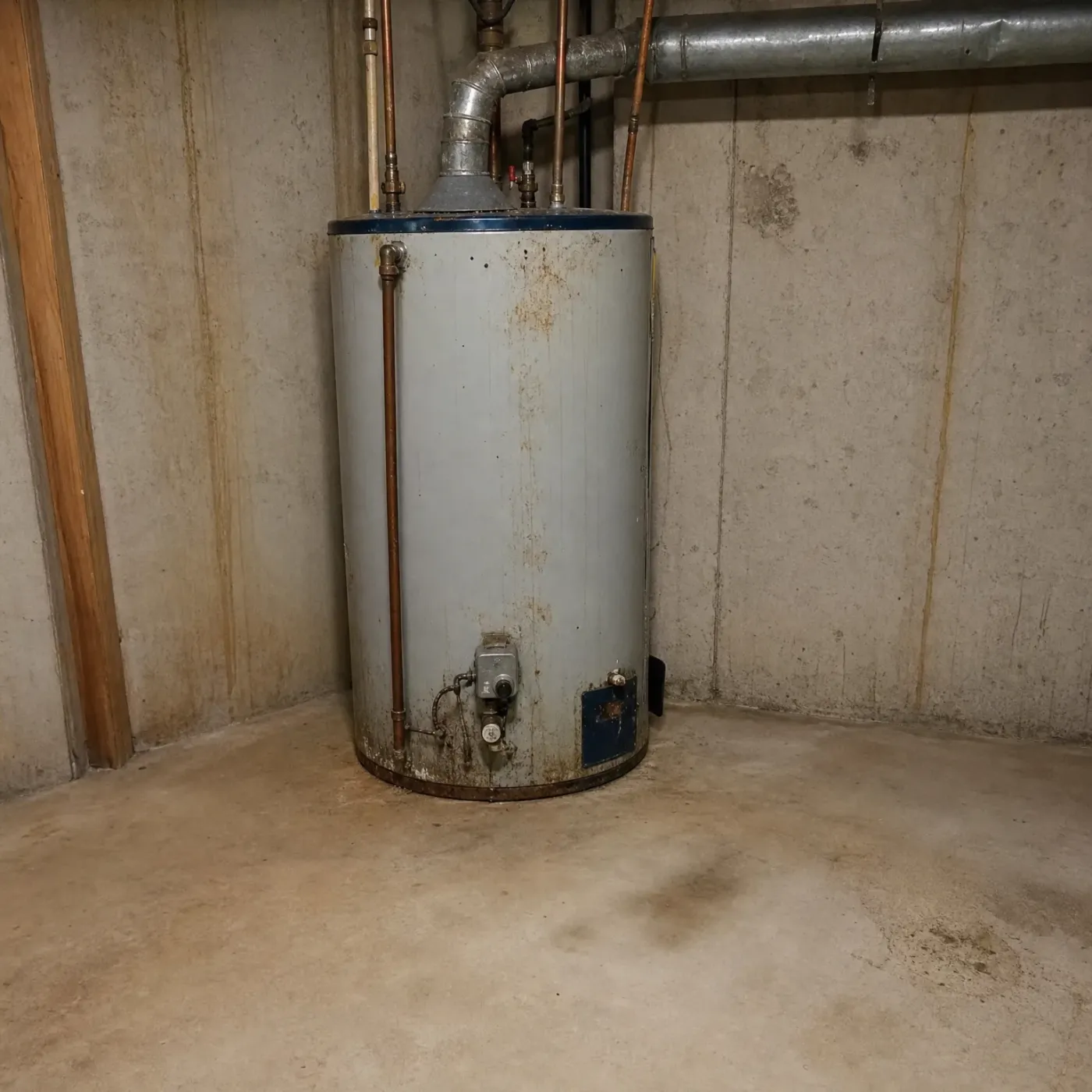
A water heater rarely leaks for just a minute. By the time you notice a puddle, it's likely been going for a while, and the damage isn't only the water you can see. Subfloors soak it up quietly, and by the time the wood feels soft underfoot, it's already been wet for some time. Basements and utility closets in Connecticut homes tend to double as storage, so boxes, tools, and anything else on that floor are sitting in the path of whatever drips down. If the leak happens to be near an outlet or a sump pump, the risk stops being about water damage at all and becomes a question of whether anything shorts out. A tank that's corroding through doesn't stabilize on its own either. Left alone, a slow drip from a rusted seam tends to turn into a full split, and what might have been a repair becomes a full replacement instead. There's also the simpler problem of hot water disappearing while all this gets sorted, which is a worse problem in January than it is in July. Not every leak is the tank failing outright. Hard water leaves mineral deposits around fittings, and those deposits can mask a slow weep for a while before it finally shows itself as a steady drip. Either way, the longer it sits, the more it costs you in more than one direction.
Power costs 29.31 cents per kilowatt-hour statewide
An electric water heater running a leak won't fix itself, and at 29.31 cents a kilowatt-hour, a tank working harder to cover for a failing part shows up fast on your bill. The longer a leaking unit runs, the more that costs you while it's still going bad.
EIA-861 2025 statewide residential average

Water seeps into the insulation around the tank first
Pressure builds and pushes the leak through the outer jacket
Water tracks down the side and collects at the base
A puddle forms under the tank or along the floor

A leak tells you something specific
A dry fitting that just needed a wrench is a different problem than a tank rusted through at the seam, and by now you have a sense of which one you're looking at. One gets fixed. The other gets replaced. Either way, the water on your floor already answered the question of whether to deal with it.
What you don't have to figure out is who shows up to look at it. Once you send the form, that part is off your plate. A contractor who works on water heaters in Connecticut gets your details and reaches out, and from there it's a conversation about your tank, not a search you have to run yourself.

A water heater pro near you
Send the request and finding a pro stops being your problem.