Tell us about the job
Takes about a minute. No obligation.
Replacing a water heater in Capitol Planning Region starts with what fuel the house runs on, because the venting configuration, combustion air requirements, and code-compliant flue sizing all follow from that. Utility gas heats more occupied homes in Capitol Planning Region, Connecticut than any other fuel, at 46.4% (2020-2024 ACS 5-year). A contractor sizing a gas water heater has to confirm that the existing flue can handle the new unit's exhaust rating and that the mechanical room draws enough combustion air, since an undersized or shared vent is a safety failure, not an aesthetic one. Get the venting wrong and the unit itself is secondary.
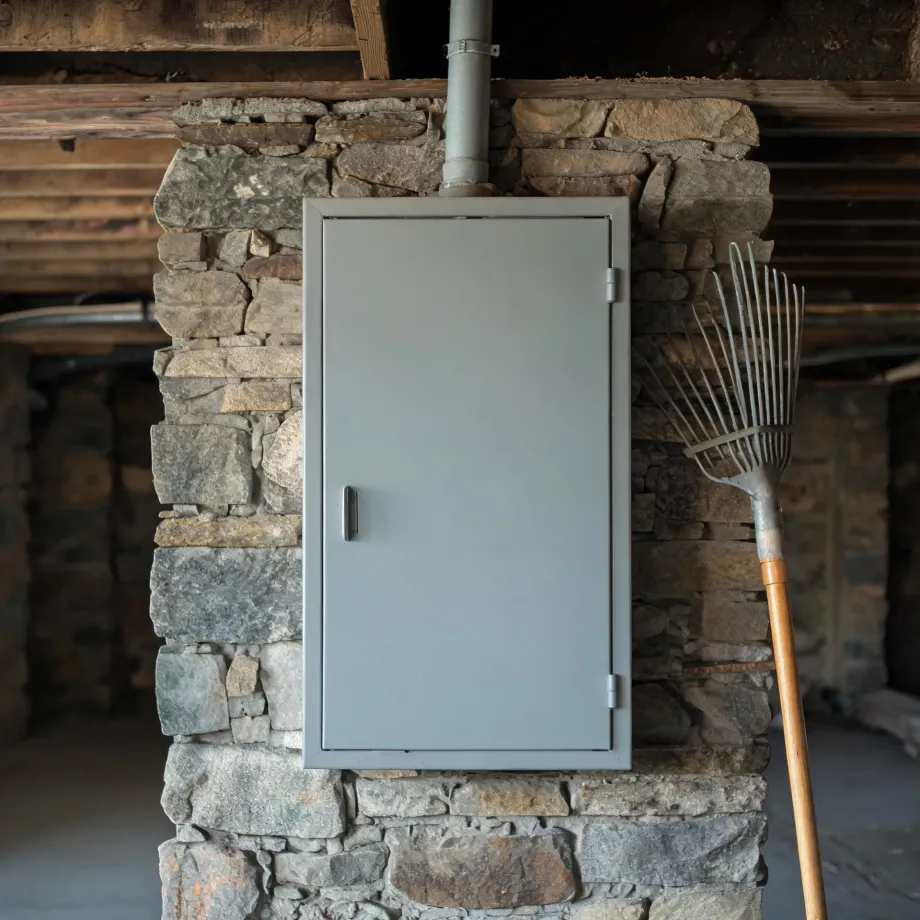
Older electrical panels in this region were built for loads that look nothing like what a new water heater draws. Half the homes in Capitol Planning Region, Connecticut were built in 1966 or earlier (2020-2024 ACS 5-year). A contractor here routinely finds that the panel needs an assessment before the installation scope can be set, because a box that was adequate for what the house originally ran may not carry what a new unit requires. The water heater itself is straightforward to specify. What takes the work is the service behind the wall.
What Gets Installed With a New Water Heater
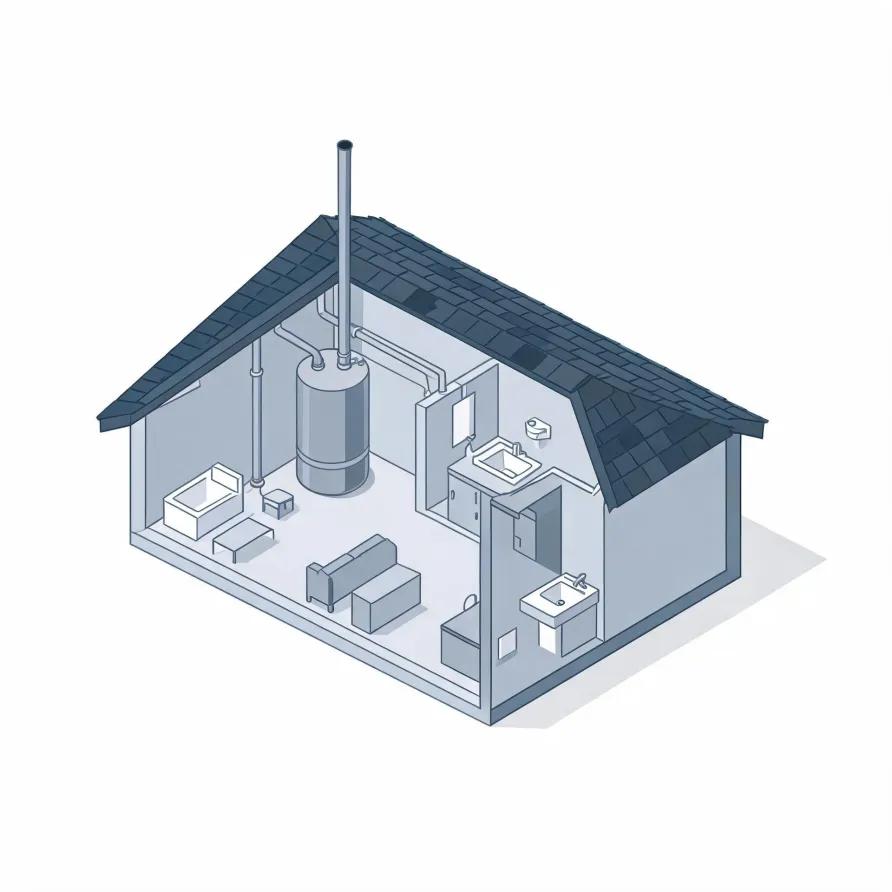
The tank or tankless unit is the centerpiece of the installation, sitting in a utility closet, basement, or garage depending on the house. It holds or heats the water your taps draw from. The pressure relief valve mounts directly on the unit and opens automatically if pressure inside climbs too high.
The supply and cold-water inlet lines run into the unit from the home's plumbing, and the hot-water outlet line carries heated water to the rest of the house. A drain line runs from the relief valve to a safe discharge point nearby. Where code requires it, an expansion tank attaches to the cold-water supply line to absorb pressure fluctuations.
The drawing shows a general layout of these components, and a licensed contractor determines exactly how they are configured in your home.
Find a contractor in Capitol Planning RegionCapitol Planning Region by the numbers
Half the homes in Capitol Planning Region, Connecticut were built in 1966 or earlier (2020-2024 ACS 5-year).
U.S. Census Bureau, 2020-2024 American Community Survey 5-Year EstimatesCapitol Planning Region, Connecticut holds 416,559 housing units (2020-2024 ACS 5-year).
U.S. Census Bureau, 2020-2024 American Community Survey 5-Year EstimatesOwners occupy 65.7% of the occupied homes in Capitol Planning Region, Connecticut (2020-2024 ACS 5-year).
U.S. Census Bureau, 2020-2024 American Community Survey 5-Year Estimates