
Tell us about the job
Takes about a minute. No obligation.
The fuel a home burns decides more about a water heater installation than most homeowners expect. Fuel oil or kerosene heats more occupied homes in Lower Connecticut River Valley Planning Region, Connecticut than any other fuel, at 51.7% (2020-2024 ACS 5-year). Fuel oil and kerosene systems require specific venting arrangements and a reliable combustion air supply, and a contractor scoping a replacement confirms both before specifying a unit. A water heater that is plumbed to the wrong flue, or installed without adequate combustion air, will underperform and corrode faster than one set up to match the fuel and the space. Getting that configuration right at installation is what makes the new unit last.
Older electrical service panels in this region were sized for appliances that drew far less than what modern water heaters require. Half the homes in Lower Connecticut River Valley Planning Region, Connecticut were built in 1972 or earlier (2020-2024 ACS 5-year). A contractor installing a new unit in stock like this checks whether the existing service can carry the new load before the equipment is ever ordered. If it cannot, the electrical work becomes part of the job, and that is what shapes the quote.
What to Expect When a Water Heater Gets Installed
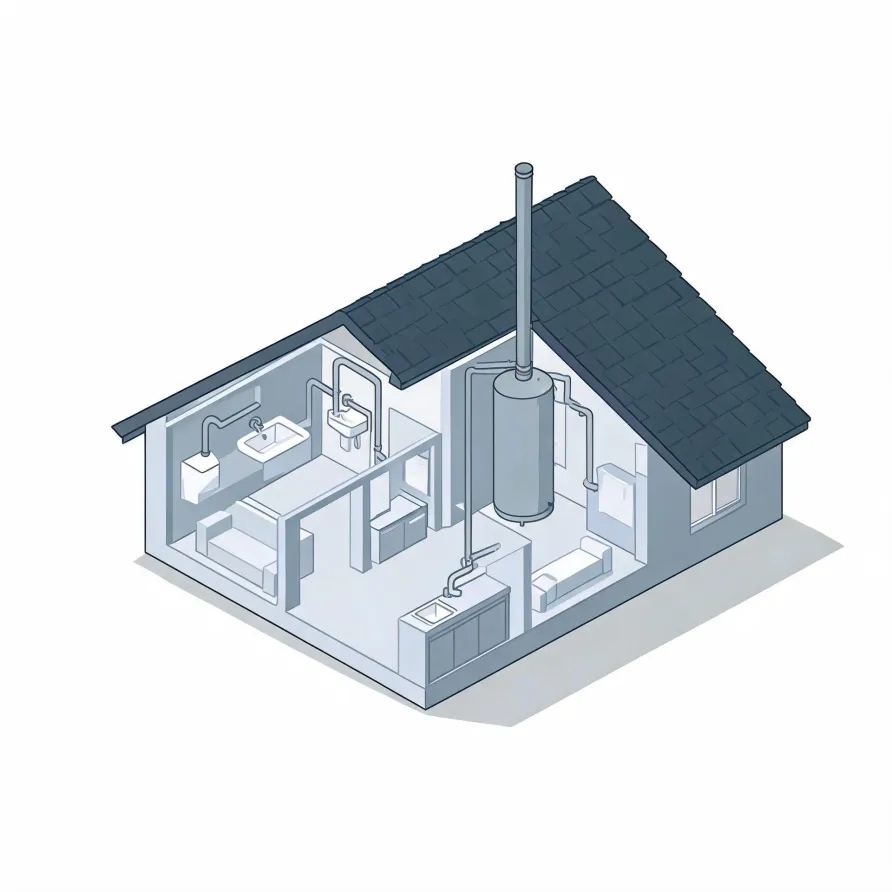
The tank or tankless unit is the centerpiece of the system. A tank unit sits in a utility room, basement, or closet and holds a reservoir of hot water ready to draw from. A tankless unit mounts to a wall and heats water on demand as it passes through.
The unit connects to the home's cold water supply line coming in and to the hot water lines running out to fixtures throughout the house. A pressure relief valve mounts directly on the unit as a safety device, and a drain line runs from it to a safe discharge point nearby.
The drawing shows a typical layout, and a licensed contractor determines exactly what applies to your house and its existing plumbing configuration.
Find a contractor in Lower Connecticut River Valley Planning RegionLower Connecticut River Valley by the Numbers
Half the homes in Lower Connecticut River Valley Planning Region, Connecticut were built in 1972 or earlier (2020-2024 ACS 5-year).
U.S. Census Bureau, 2020-2024 American Community Survey 5-Year EstimatesLower Connecticut River Valley Planning Region, Connecticut holds 82,963 housing units (2020-2024 ACS 5-year).
U.S. Census Bureau, 2020-2024 American Community Survey 5-Year EstimatesOwners occupy 75.8% of the occupied homes in Lower Connecticut River Valley Planning Region, Connecticut (2020-2024 ACS 5-year).
U.S. Census Bureau, 2020-2024 American Community Survey 5-Year Estimates