Tell us about the job
Takes about a minute. No obligation.
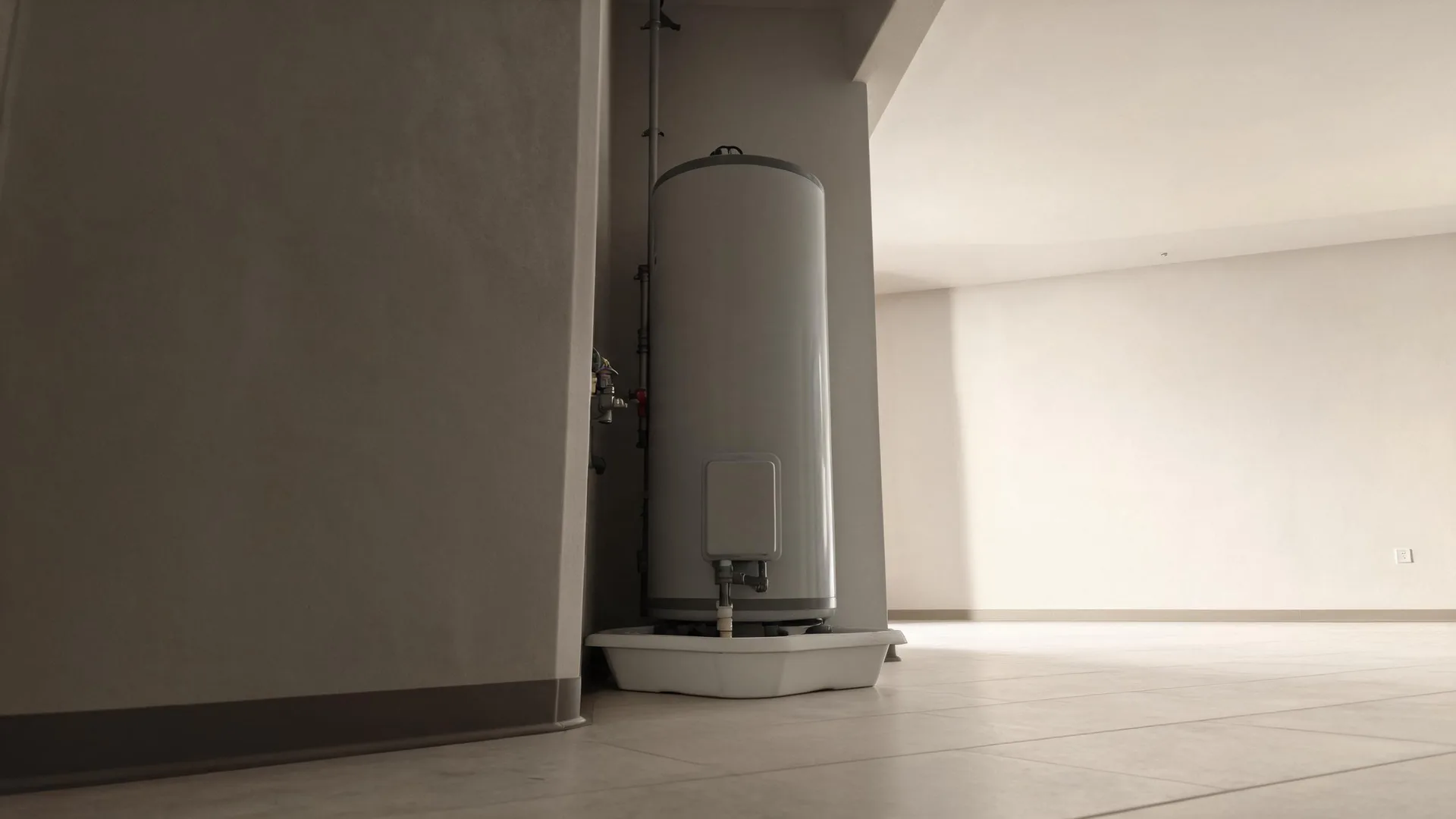
Gas-fired water heaters accumulate wear on the burner, the thermocouple, and the flue path with every heating cycle, and a home that burns utility gas year-round gives none of those parts a real rest. Utility gas heats more occupied homes in Capitol Planning Region, Connecticut than any other fuel, at 46.4% (2020-2024 ACS 5-year). A contractor diagnosing a failed or underperforming unit here starts with the burner orifice and the thermocouple, because combustion hours are what wears them, and the flue path gets checked for blockage or corrosion before the tank itself is condemned. Sediment buildup at the bottom of a gas-fired tank also accelerates when the burner runs hard and often, which changes how a quote gets structured.
Older plumbing and venting configurations shape what a water heater repair actually costs here. Half the homes in Capitol Planning Region, Connecticut were built in 1966 or earlier (2020-2024 ACS 5-year). A system installed in a house of that vintage is often surrounded by original supply lines, pressure relief routing, and venting runs that were sized and fitted for something no longer in the house. When a contractor opens the unit and finds a failed component, the repair scope can shift depending on whether the surrounding infrastructure will take a current replacement part or needs to be brought in line with it. That is not a hypothetical in a housing stock this old.
The Parts of a Water Heater a Contractor Checks First
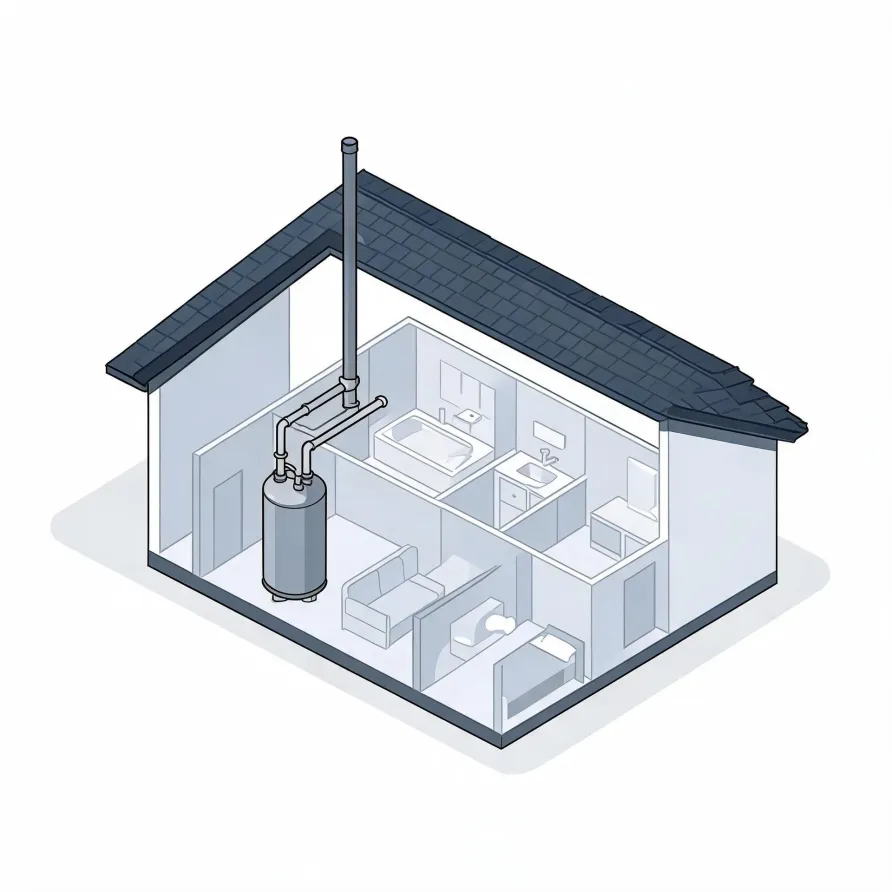
The tank is the piece a homeowner notices first, usually standing in a basement, utility closet, or garage. It holds the water and keeps it at temperature. When the tank itself is the problem, a contractor looks at the lining, the pressure relief valve on the side, and the anode rod inside, since each of those can fail quietly before anything obvious goes wrong.
At the top of the tank, cold water enters through one connection and hot water leaves through another, both fed by short pipes with shutoff valves nearby. The burner assembly or heating element sits at the base or inside the tank depending on whether the unit runs on gas or electricity, and the thermostat that tells it when to fire is mounted on the outside of the tank body.
The drawing shows a typical layout, and a licensed contractor determines which parts apply to the specific unit and installation in your home.
Find a contractor in Capitol Planning RegionCapitol Planning Region by the numbers
Half the homes in Capitol Planning Region, Connecticut were built in 1966 or earlier (2020-2024 ACS 5-year).
U.S. Census Bureau, 2020-2024 American Community Survey 5-Year EstimatesCapitol Planning Region, Connecticut holds 416,559 housing units (2020-2024 ACS 5-year).
U.S. Census Bureau, 2020-2024 American Community Survey 5-Year EstimatesOwners occupy 65.7% of the occupied homes in Capitol Planning Region, Connecticut (2020-2024 ACS 5-year).
U.S. Census Bureau, 2020-2024 American Community Survey 5-Year Estimates